We introduce Image-to-Video Transfer (I2VT), which improves pretrained video editors and expands them to new editing tasks using an image editor. Our intuition is that an image is simply a one-frame video, so editing images well could be a foundation for editing videos well. It enables efficient post-training with no architectural changes and no new videos, using only individual images.
Videos
Video Results
Each example shows the source video next to the outputs of I2VT-1.3B, I2VT-14B, and I2VT-CoF for the same instruction.
Comparison
Where Existing Editors Fail
Existing video editors often fail at the four new editing tasks in OpenVE++: they leave the video unchanged, break the subject, or put the light in the wrong place. Each example shows the same source video and instruction for four existing editors and for I2VT.
Method
Image-to-Video Transfer
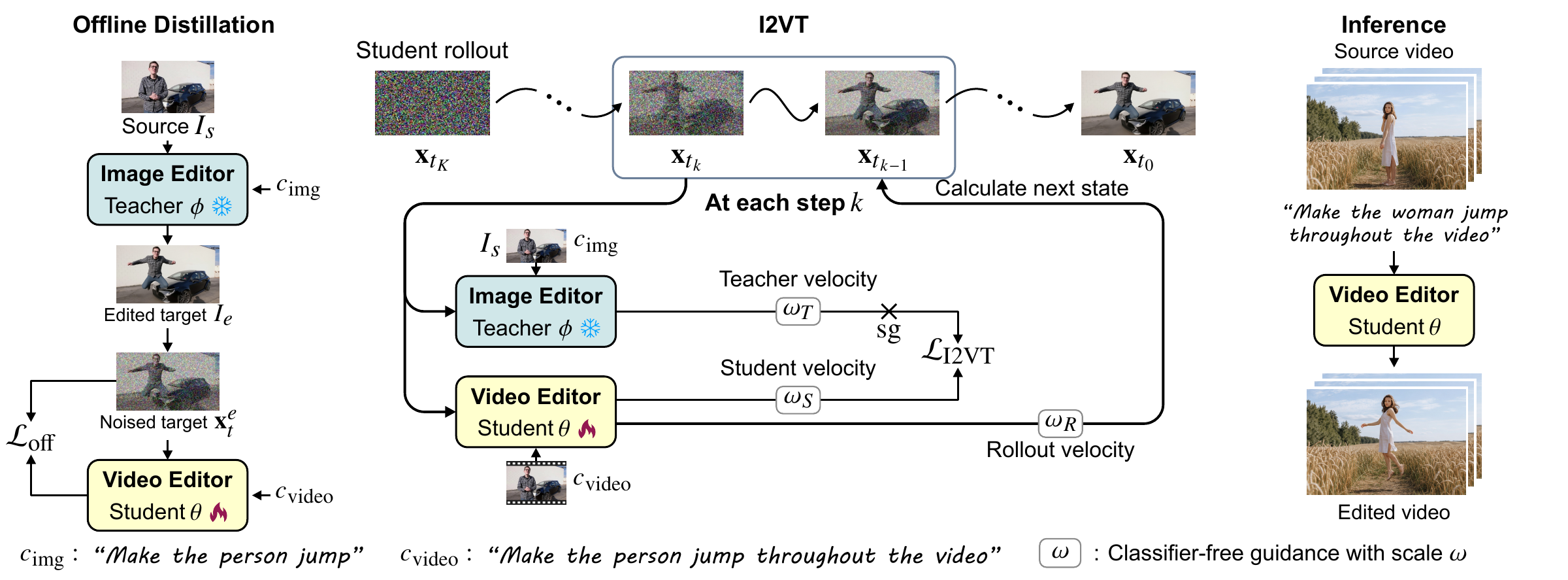
Image-to-Video Transfer (I2VT) lets a pretrained video editor role-play as an image editor: it edits an individual image as a one-frame video, with a frozen image editor guiding its predictions at each denoising step.
First principle
An image is a one-frame video, so a video editor that edits videos well must also edit images well.
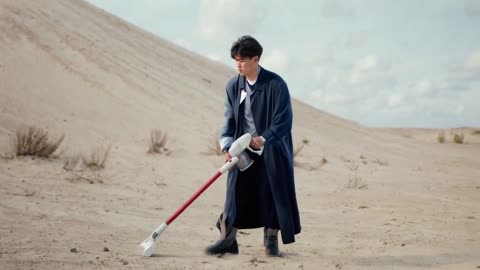
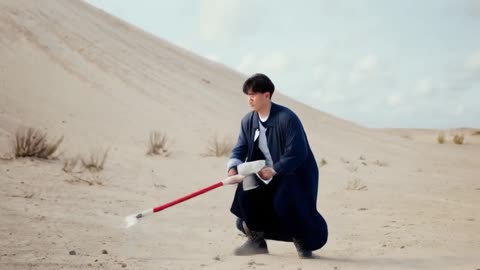
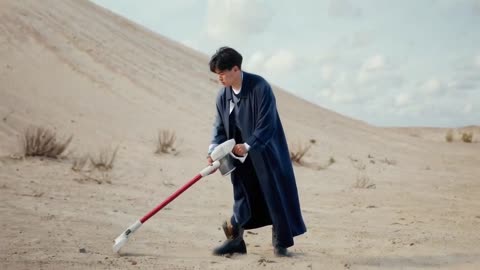
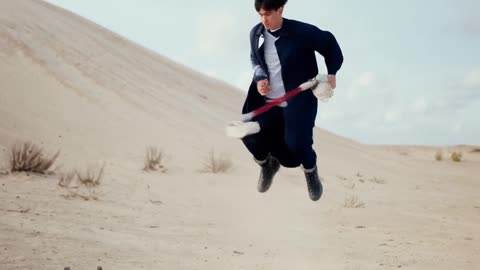
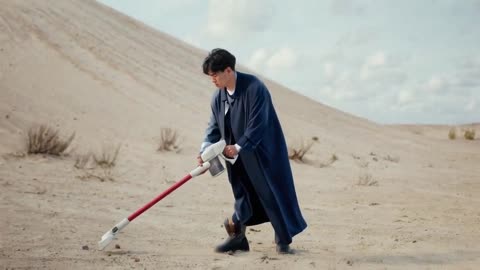
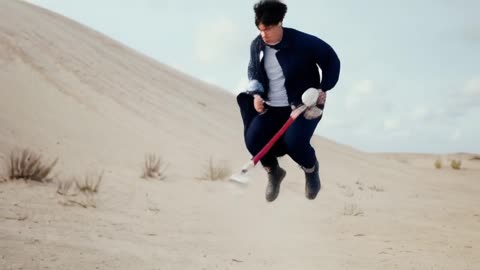
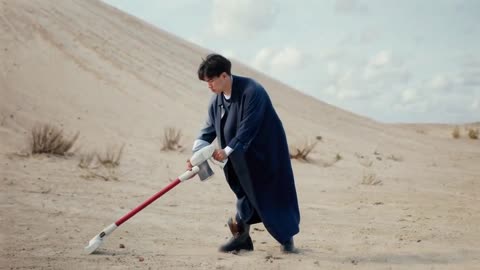
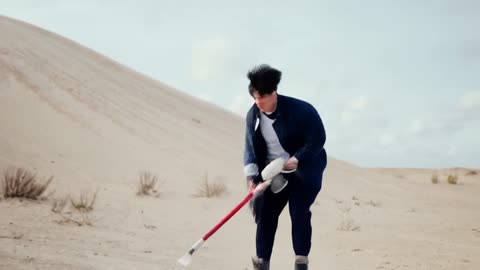
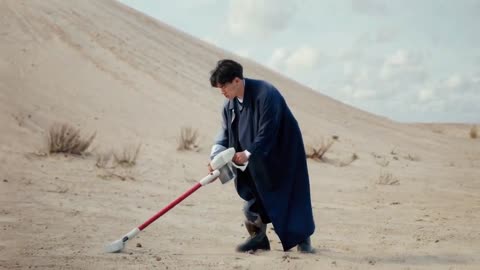
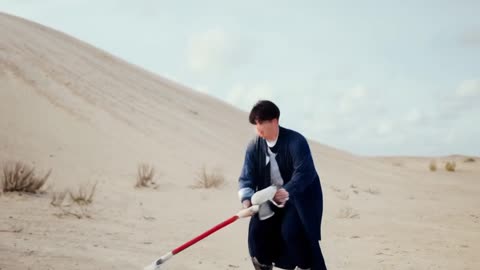
- A video is a stack of frames.
- An image is a one-frame video.
- So every video edit contains image edits.
- I2VT lets the video editor role-play as an image editor, guided by a frozen image editor.
- The improved editing carries back to every frame of the video.
Online Distillation
I2VT is designed to fine-tune the video student along its own denoising trajectory with supervision from an image editor: the student edits each source image as a one-frame video from noise, and the teacher guides its prediction at each step.
Inference
At inference time, the teacher is discarded, and the student edits a source video using the sampler and the same settings as the pretrained editor.
Benchmark
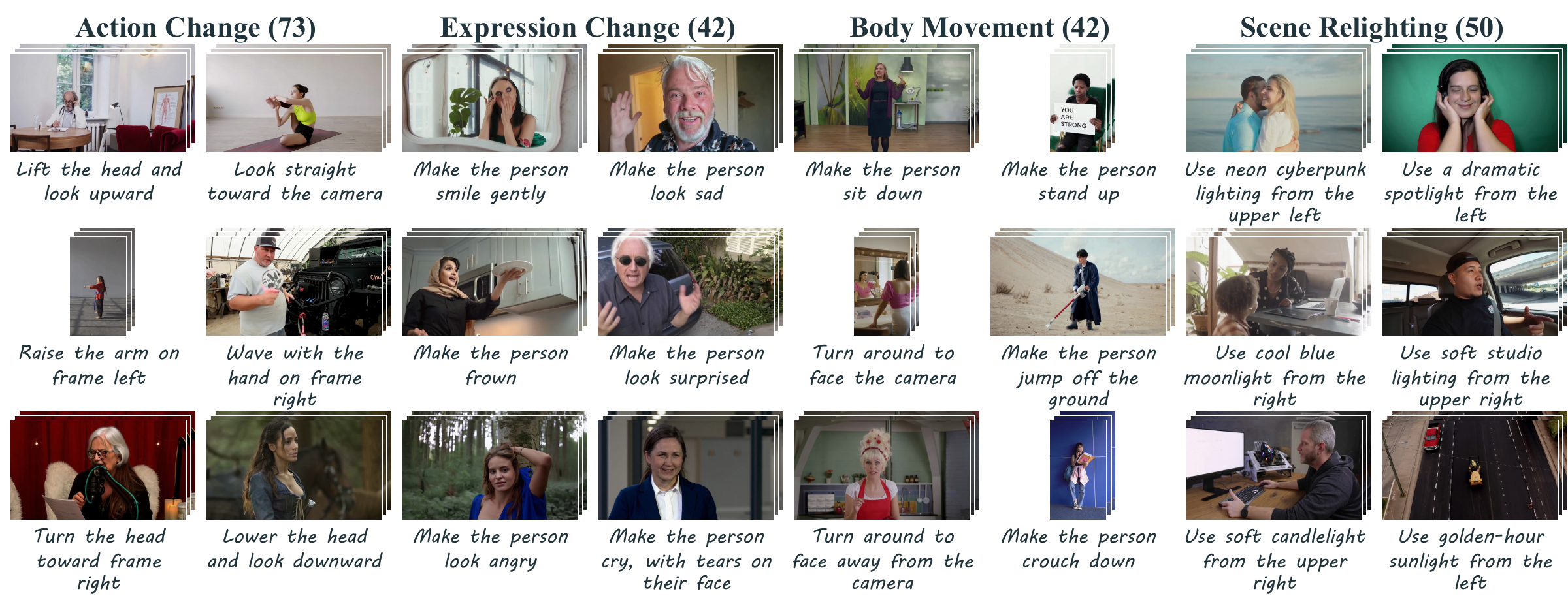
OpenVE++
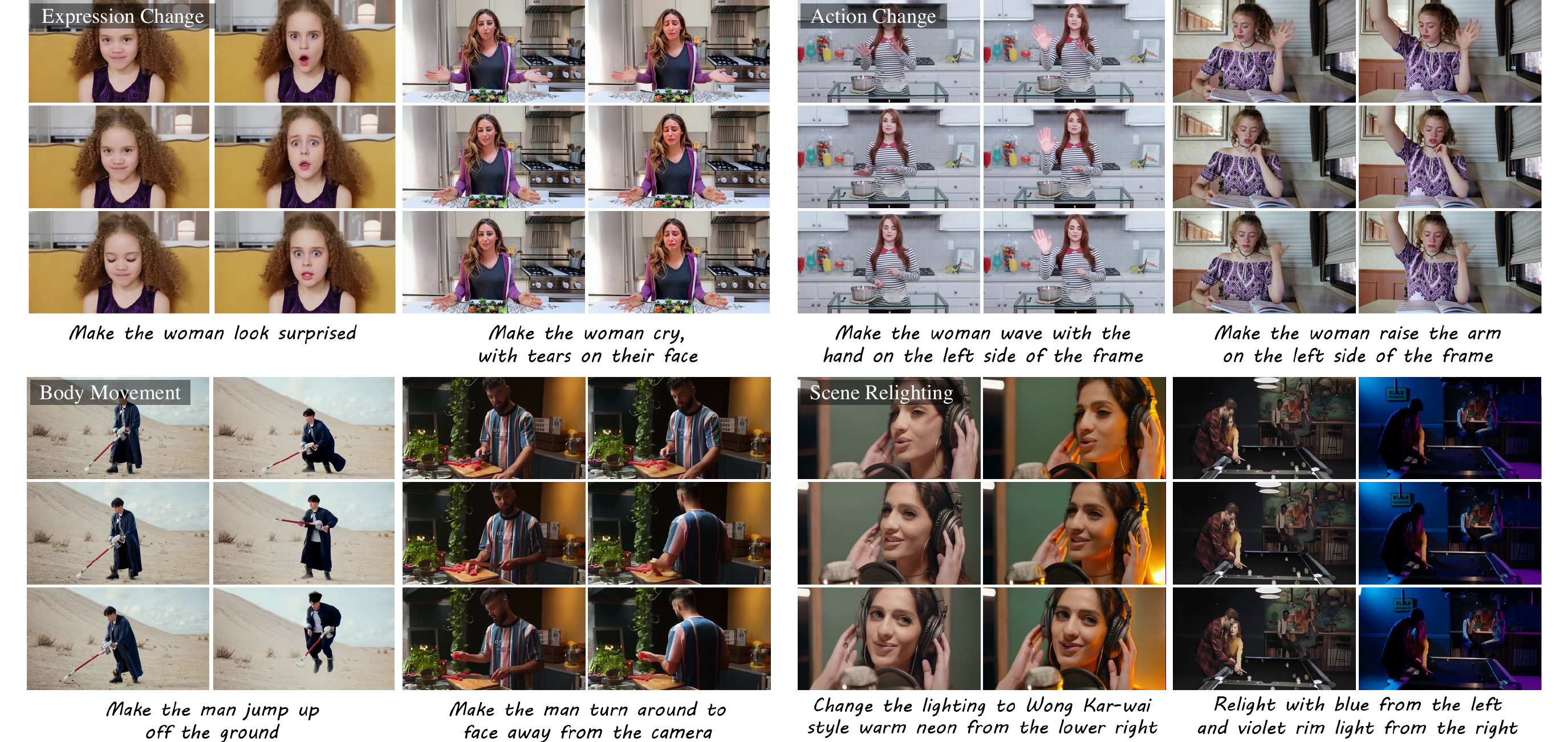
These tasks test whether video editors can change a person’s performance and a scene’s lighting, which video production often requires.
Each category covers diverse fine-grained edits, and all source videos are strictly disjoint between the training and evaluation splits.
Results
Comparison with Existing Video Editors
We fine-tune the three base editors on both pools of I2VT-17K and name the resulting models I2VT-1.3B, I2VT-14B, and I2VT-CoF. Each model handles both basic and new edits.
Our models achieve state-of-the-art results among the compared open-source video editors, with I2VT-14B scoring 3.50 on OpenVE-Bench and 3.34 on OpenVE++ under Gemini 2.5 Pro, and I2VT-CoF scoring 4.01 on OpenVE++ under Gemini 3.8 Flash.
Pretrained editor I2VT, overall score. OpenVE-Bench is judged by Gemini 2.5 Pro and OpenVE++ by Gemini 3.8 Flash.
Following the OpenVE-Bench protocol, we evaluate basic editing on OpenVE-Bench and new abilities on OpenVE++.
Strengthening Existing Abilities
To verify whether I2VT strengthens existing abilities, we train on the OpenVE pool and evaluate on OpenVE-Bench.
I2VT improves overall basic editing performance for all three editors, raising their scores from 3.10 to 3.48, 2.29 to 3.19, and 3.33 to 3.68.
Adding New Abilities
To test whether I2VT transfers new editing abilities to video editors, we train on the Action Change, Expression Change, and Body Movement data of the OpenVE++ pool.
Training on individual images raises the new-task overall score of Bernini-R-1.3B from 1.66 to 2.99 and Bernini-R-14B from 2.25 to 3.27. VideoCoF gains the most, rising from 1.17 to 3.33 and reaching a similar level to fine-tuned Bernini-R-14B despite its weaker starting point.
Cite
Citation
@misc{xie2026i2vt,
  title  = {Improving and Expanding Video Editing Capabilities Without Videos},
  author = {Ji Xie and Yanhao Jia and Xiangpeng Yang and Martin Q. Ma and Sihan Xu and Erik Cambria and Louis-Philippe Morency},
  year   = {2026},
  url    = {https://i2v-transfer.github.io/}
}